
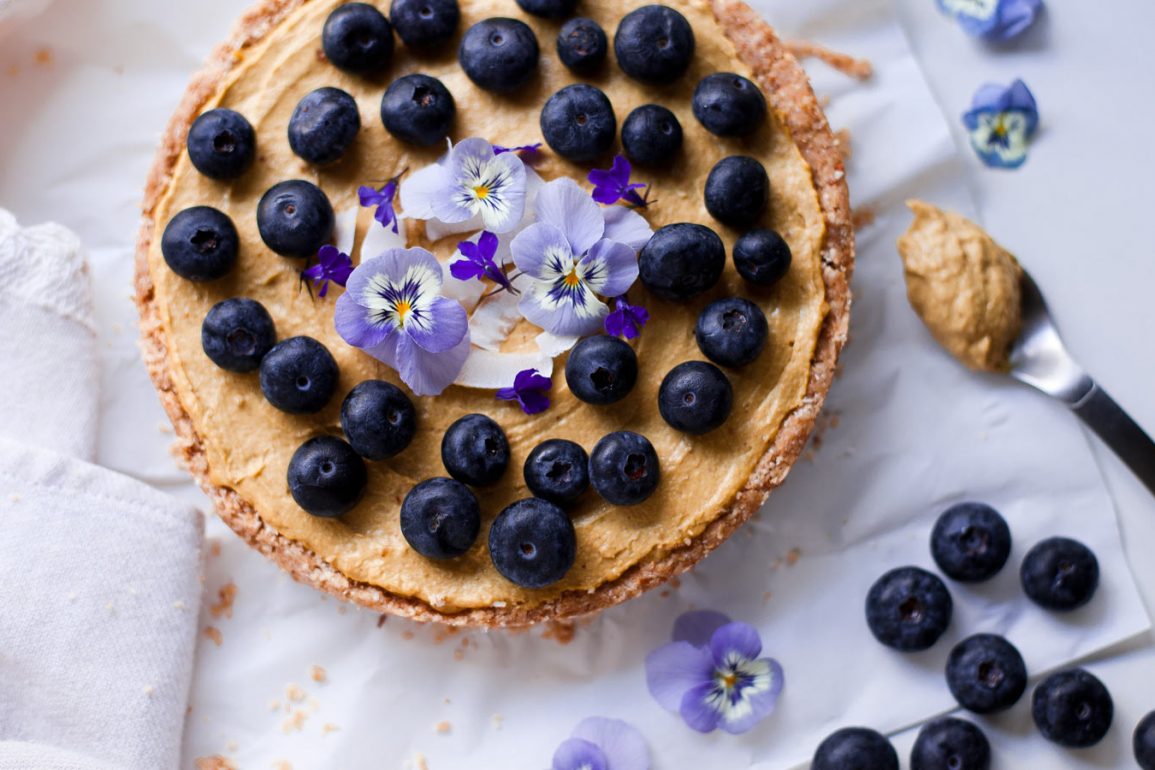
Color in edible flowers is not for the eye alone, but for the part of us that responds instinctively to richness, depth, and atmosphere. Purple edible flowers bring weight to a plate — tones that feel velvety, ripe, and intentional, somewhere between fruit skin, twilight shadows, and stained glass. They arrive not just as color, but as character, lending drama, warmth, and a sense of quiet opulence to whatever they touch.
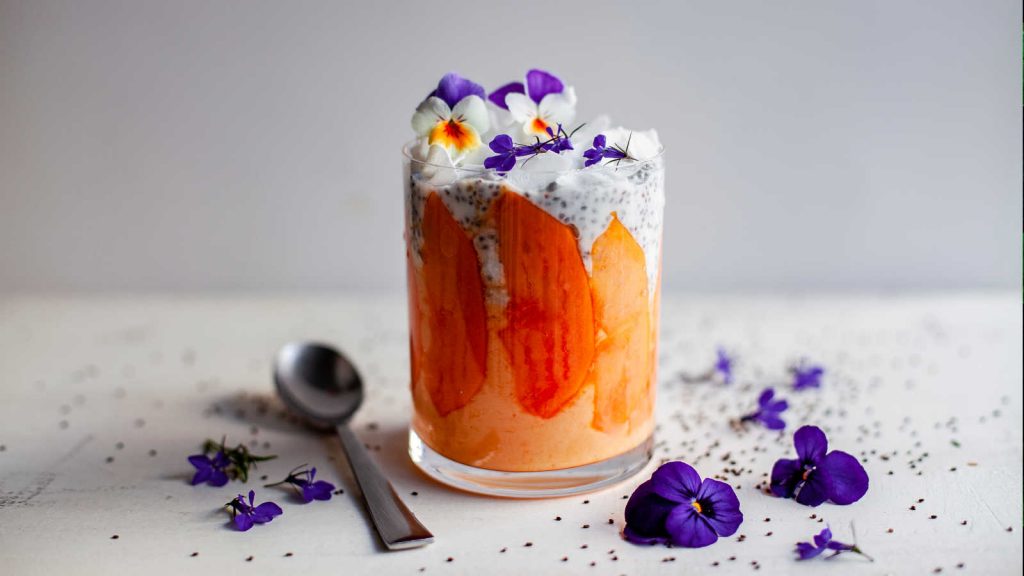
Why Purple Feels Different on the Plate
Purple sits at the meeting point of red and blue, and in flowers, it carries both worlds at once. Many purple petals owe their color to anthocyanins — pigments that deepen with concentration and shift subtly with acidity, light, and time. Unlike blue flowers, which often feel unfamiliar in everyday cooking, purple ones already belongs to the kitchen.
In cooking, these pigments respond gently rather than dramatically. Acidity may brighten them toward magenta; fat and sugar soften them into plum or wine tones. Purple flowers rarely aim for spectacle alone — instead, they create cohesion, anchoring color palettes and giving dishes a sense of completeness. They feel intentional rather than accidental, chosen rather than stumbled upon.
Fresh vs. Dried: Two Expressions of Purple
Fresh purple flowers speak in volume and texture — petals wide, colors saturated, aroma released at first touch. They belong to the moment: pressed onto a cake, scattered over fruit, folded gently into cream. Their presence is visual, immediate, and generous.
Dried purple flowers, by contrast, trade surface for depth. Color softens, but aroma concentrates; flavor becomes rounder, more inward. Lavender buds, dried violets, or rosemary flowers linger in sugar, honey, butter, and dough — less decorative, more architectural.
Purple moves easily between these two states. Fresh, it shapes the plate; dried, it shapes memory.
A curated list of purple edible flowers for your kitchen
Lavender (Lavandula angustifolia)
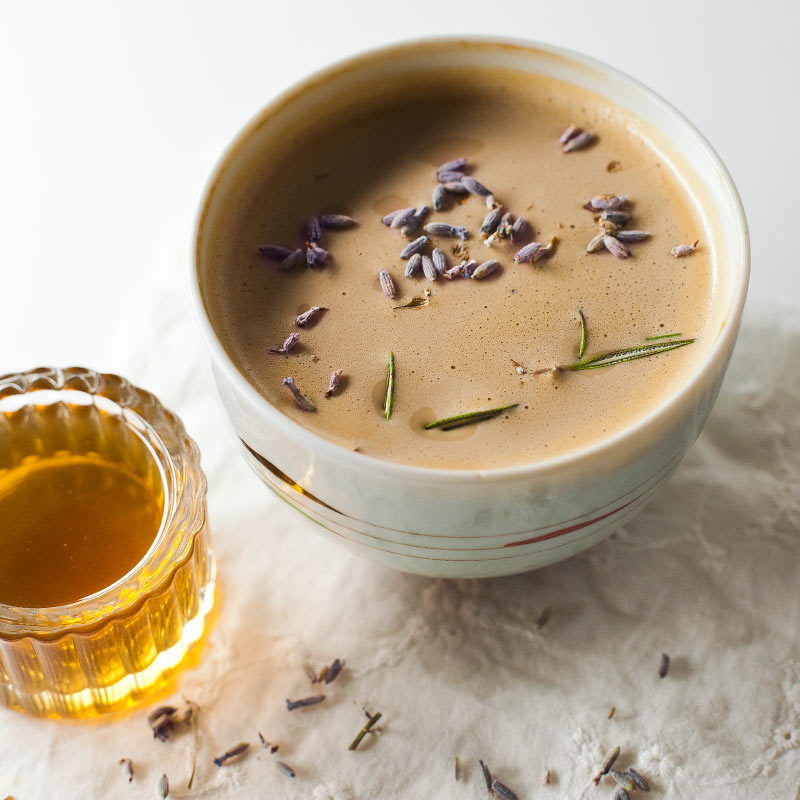
Lavender is purple in its most distilled form. Aromatic and unmistakable, it brings a floral sweetness edged with bitterness — a balance that keeps it from becoming sentimental. Its color may fade in cooking, but its presence never does
Fresh lavender can perfume creams, honey, and fruit with a clean, airy note. Dried buds concentrate that character, lending depth to syrups, shortbread, sugar blends, roasted fruit, and custards. Paired with lemon, apricot, chocolate, or cream, lavender reads as composed and elegant — purple used with confidence, not restraint.
Violets (Viola odorata)
Among purple edible flowers, Viola odorata holds a special place. Compact, deeply perfumed, and historically prized, it carries a shaded, almost secretive presence — closer to woodland edges than garden borders. Its petals gather in deep violet and blue-plum tones, rich without being showy.
The flavor is gently sweet and unmistakably floral, lingering rather than immediate. Used fresh or lightly crystallised, it shines in creams, syrups, simple cakes, and fruit, where aroma leads and color follows.
Violas (Viola cornuta & related species)
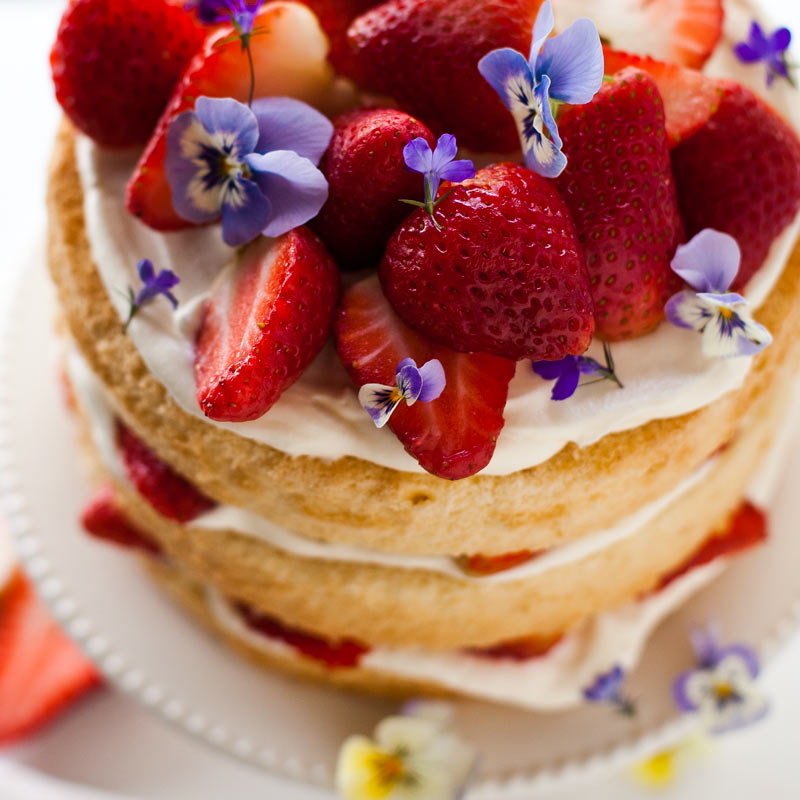
Violas offer purple through repetition rather than scale. Their small, refined blooms bring color as a scatter — light, rhythmic, and quietly abundant. Where a single flower might disappear, a handful creates presence. Their flavor remains mild and green, allowing color and texture to lead without interference.
Used fresh, violas excel where delicacy matters. They are pressed onto frosted cakes, dotted across tarts, layered over strawberries and creams, or floated on chilled desserts and yogurts. Their purples range from cool violet to soft lilac and inky indigo, reading especially clearly against pale, creamy surfaces, where they contrast best.
Pansies (Viola × wittrockiana)
Where violas speak in scatter, pansies speak in presence. Their broad, velvety petals and generous faces carry purple at full scale, making them feel less like garnish and more like a deliberate design choice. Flavor remains mild and green, secondary to the visual weight they bring to the plate.
Best used fresh and whole, pansies shine where they can be seen clearly: pressed onto frosted cakes, brownies, placed deliberately on tarts, layered into open sandwiches, or floated on chilled desserts. Their spectrum of purples — from deep violet to brushed lilac and near-black — anchors pale, creamy compositions, giving sweetness a sense of structure and intention.
Horned violets (Viola cornuta)
More botanical in character than the garden pansy, Viola cornuta offers slender petals and a slightly wilder presence. Its flavor remains soft and green, but its appearance feels closer to the meadow than the patisserie.
Used fresh, it excels where delicacy matters: layered onto tarts, folded into buttercream, or scattered across salads and open desserts. Its purples tend toward cool violet and soft plum, lending refinement without heaviness.
Preserving the Purple
Purple is more forgiving than blue, but it still responds to care. Heat softens its depth; time mellows its edges. Fresh petals bring immediacy and softness, while dried flowers offer concentration and continuity.To keep purple present, choose preparations that respect its structure: gentle infusions, fats and sugars that carry aroma, and final-moment placement when visual impact matters. Purple does not demand control — it rewards fluency.
Tips for Using Purple Edible Flowers

- Let purple rest against softness — creams, yogurts, whipped cheeses, pale batters, and milk-based desserts give the color somewhere to settle, allowing it to feel indulgent rather than severe.
- Work in layers rather than contrasts — purple grows richer when it reappears across the plate, echoed in petals, leaves, or vegetables, creating cohesion instead of a single accent.
- Use texture as a counterpoint — velvety petals, tender crumbs, smooth purées, and glossy fruit deepen the color’s presence and keep it firmly edible.
- Anchor, then finish — let purple form part of the structure, and add the flowers at the end, where their color feels intentional, fresh, and alive.
Always remember: purple is a color that welcomes presence — layered, expressive, and quietly luxurious— shaping the mood of a dish and lingering just long enough to be remembered.
On the plate, this color feels deliberate without being severe, indulgent without excess — a reminder that richness, when handled with ease, can feel both natural and refined.