
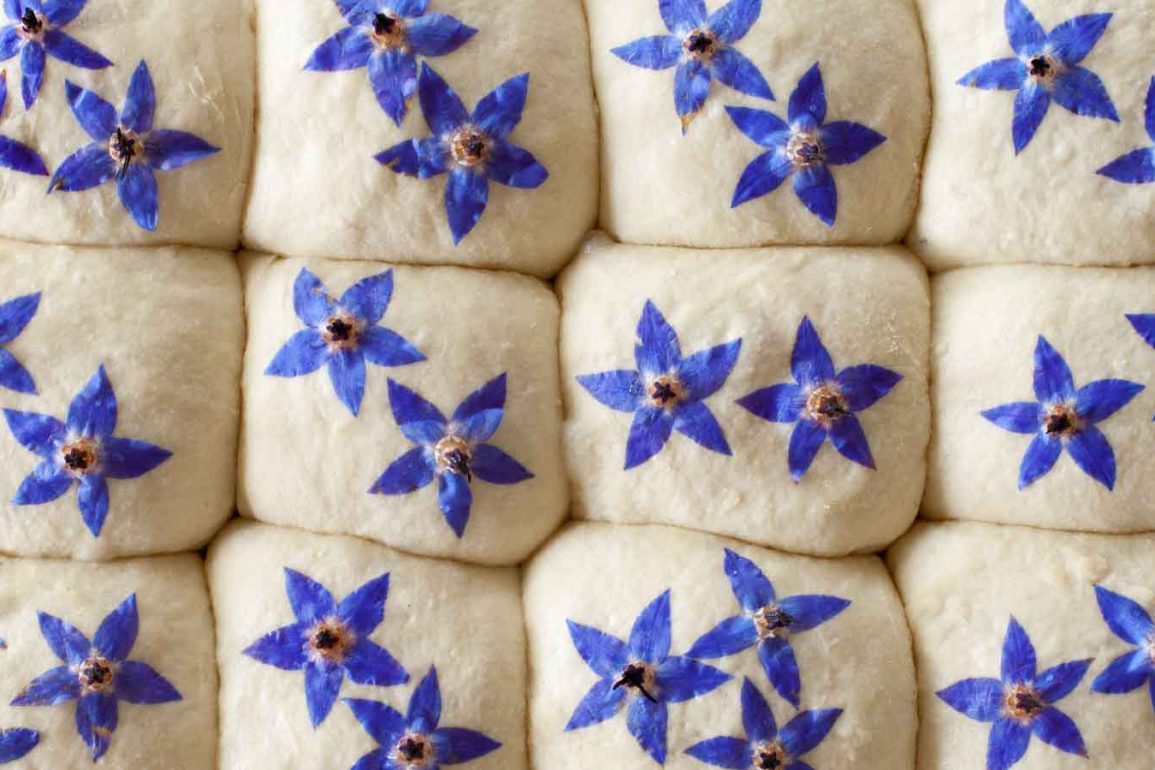
All flowers have something that makes them unique, but some, more than others. Blue edible flowers have a way of turning any plate into a little constellation — their tones cool and deep like twilight, or luminous like the edge of a summer sky after rain. They arrive on the table as both decoration and mood, lending grace, freshness, and an unspoken story to whatever they touch.
The Science of Blue Edible Flowers
True blue is one of nature’s most elusive colors — fewer than a tenth of flowering plants carry it in their petals, and when they do, it’s often brushed with purple, as if the garden could not quite hold the sky without a trace of dusk. This rarity makes every blue-toned bloom feel like a treasure: a momentary apparition that will not linger. On the plate, these hues cool the eye and sharpen the appetite, evoking fresh water, shadowed woodlands, and the quiet hours before night. They balance the warmth of summer fruits and golden pastries, and when paired with other colors, they create a harmony that feels both regal and effortless.
In cooking, the science deepens the magic — blue pigments, often anthocyanins, shift with pH, allowing the cook to play alchemist: coaxing sky into violet or indigo with a drop of citrus or a whisper of baking soda. To serve a blue flower is to serve both flavor and wonder, a fragment of the rarest spectrum.
A short curated list of blue edible flowers for your kitchen
Borage (Borago officinalis)
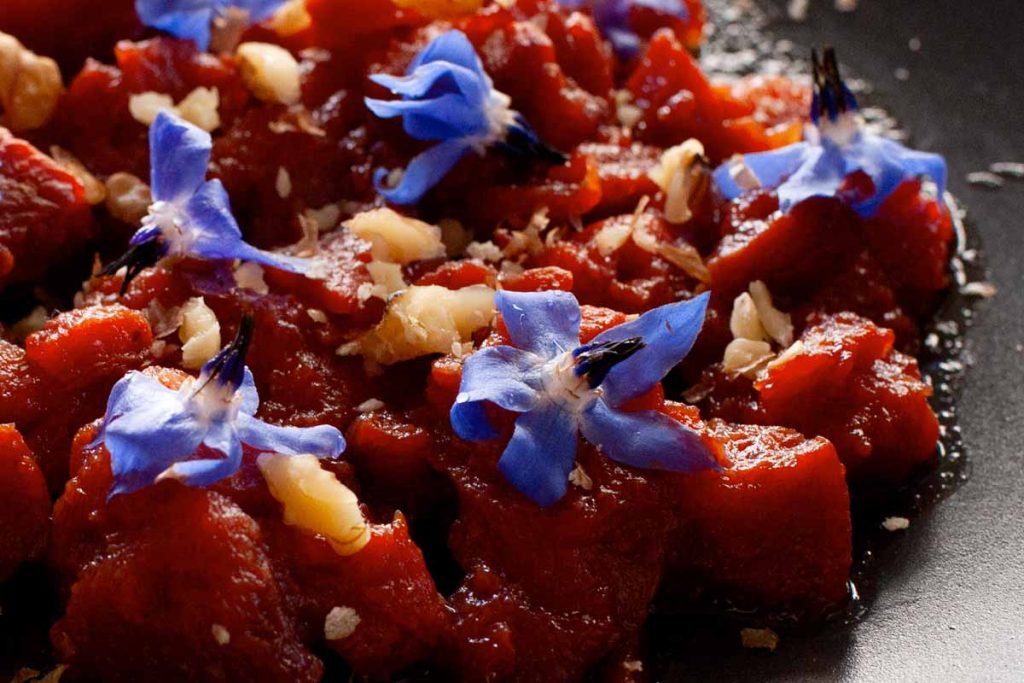
Bright and star-shaped, borage holds one of the clearest blues in the edible garden — fresh, open, and almost aqueous. Its flavor is crisp and cucumber-like, making it ideal for cold preparations: salads, yogurt, fresh cheeses, and chilled drinks.
Best used whole and fresh, borage needs little intervention. Frozen into ice cubes or scattered just before serving, it releases color gently, without clouding either flavor or mood.
Anise-Scented Sage (Salvia guaranitica)
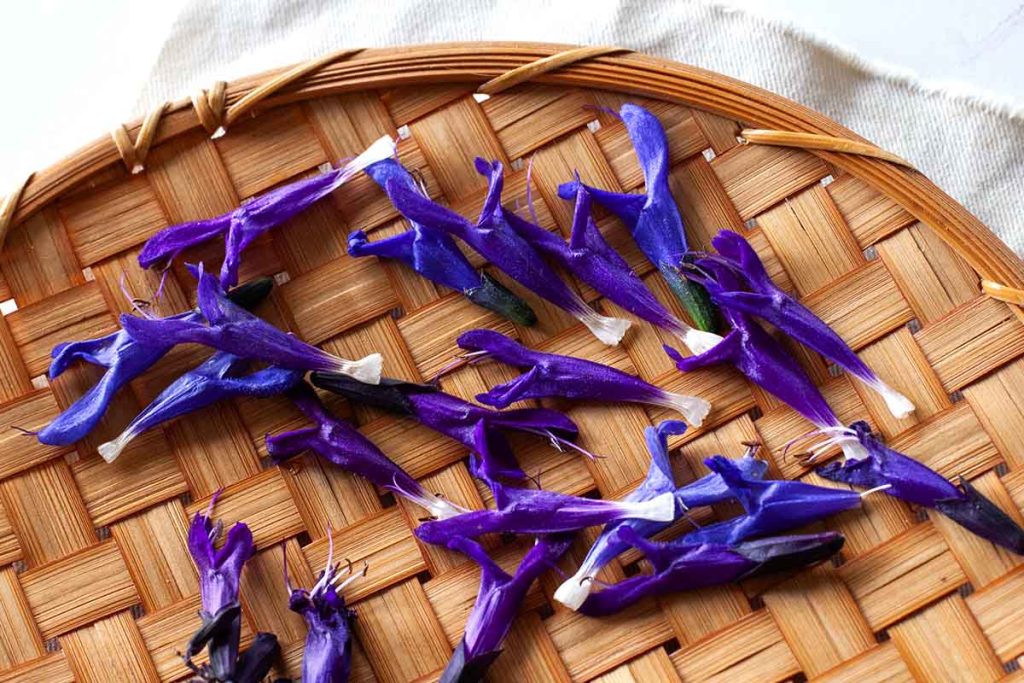
Deep cobalt and sharply defined, anise-scented sage brings structure to blue. Its blossoms carry a soft anise note that pairs naturally with fruit, citrus, and light syrups.
Add them at the very end — their color fades quickly with heat. Used sparingly, they behave like perfume: a finishing touch rather than a foundation.
Lobelia (Lobelia erinus)
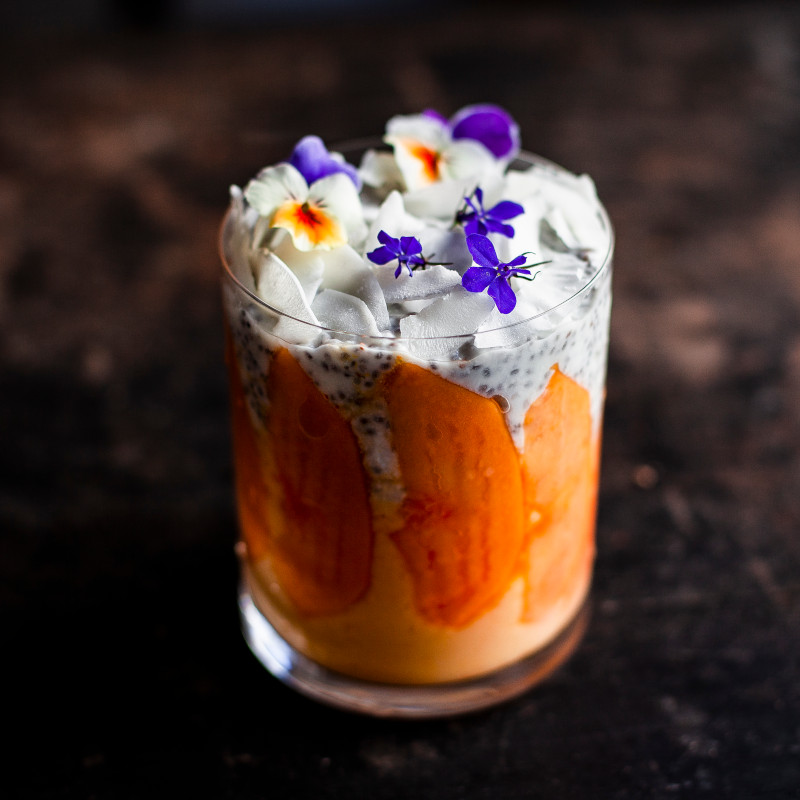
Lobelia brings blue in miniature. Its tiny blossoms, ranging from pale sky to deep sapphire, are best treated as ornament rather than ingredient — scattered lightly over cocktails, canapés, or desserts served immediately.
Use sparingly and occasionally, and avoid during pregnancy or breastfeeding. In small quantities, lobelia remains firmly in the realm of visual delight, where its delicacy truly belongs.
Other Blue Edible Flowers
- Cornflower (Centaurea cyanus) — A clear, archival blue, prized more for contrast and structure than flavor.
- Hyssop (Hyssopus officinalis) — A herbaceous blue with warmth and depth, often infused rather than eaten fresh.
- Butterfly Pea (Clitoria ternatea) — Famous for its saturated indigo and color-shifting infusions, where blue behaves like liquid.
- Chicory Flower (Cichorium intybus) — Pale, fleeting, and roadside-born, offering a washed sky rather than a bold statement.
- Mealycup Sage (Salvia farinacea) — Soft, matte blue tones with a restrained herbal presence.
Preserving the Blue
Blue in petals is a delicate negotiation. Heat softens it; acidity nudges it toward violet; time itself seems to blur its edges. What appears fixed in the garden becomes surprisingly responsive in the kitchen, asking for care rather than control.
To keep blue clear and present, favor cool preparations and gentle handling. Add blossoms at the final moment, steep them briefly rather than boiling, and choose neutral liquids when color matters more than flavor. Some flowers will lend their blue to water, syrups, or teas, tinting them with an almost transparent intensity — a reminder that blue is not meant to be forced, but coaxed.
Tips for Using Blue Edible Flowers
- Pair with contrasting tones — cream, bright yellow, orange and fresh green make this color sing.
- Highlight texture as well as color — rough stoneware, glossy glazes, or matte pastels set off blue petals beautifully.
- Use whole flowers for drama — borage, lobelia and sage blossoms hold their shape best on the plate.
- Add as a last breath— most blue flowers fade in heat; add them just before serving.
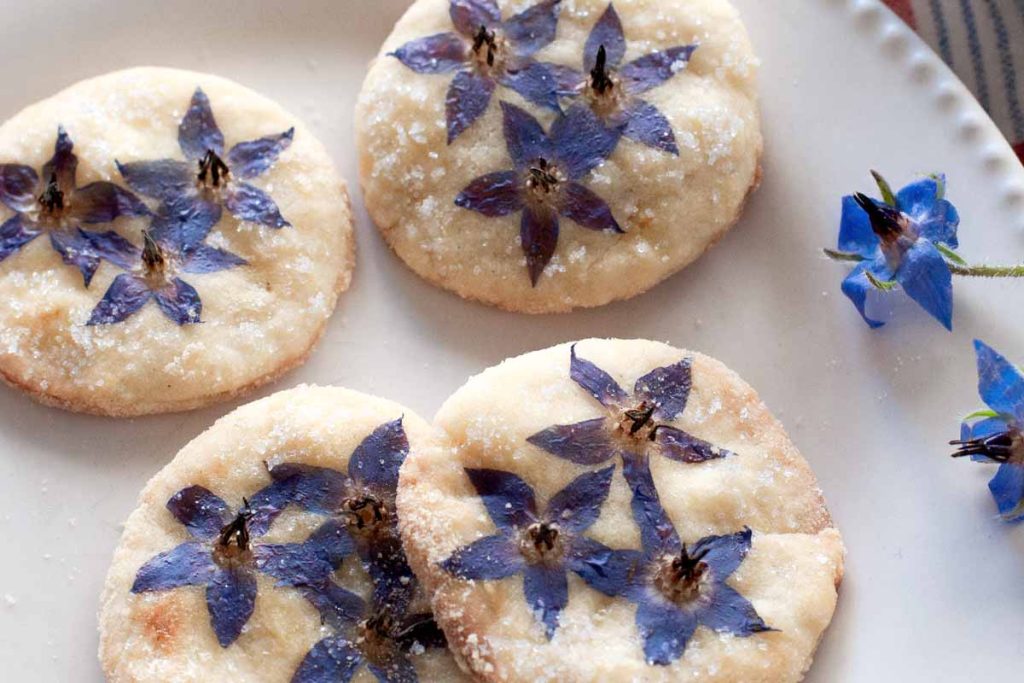
True blue is one of the rarest colors the kitchen ever sees. It appears sparingly, holds briefly, and never quite behaves like the others. Cooking with a blue flower is to accept its impermanence: it asks for attention, timing, and a light hand — and in return, it offers something rare: the impression of the sky, briefly held, before it slips away.