
Common Name: Borage
Scientific Name: Borago officinalis
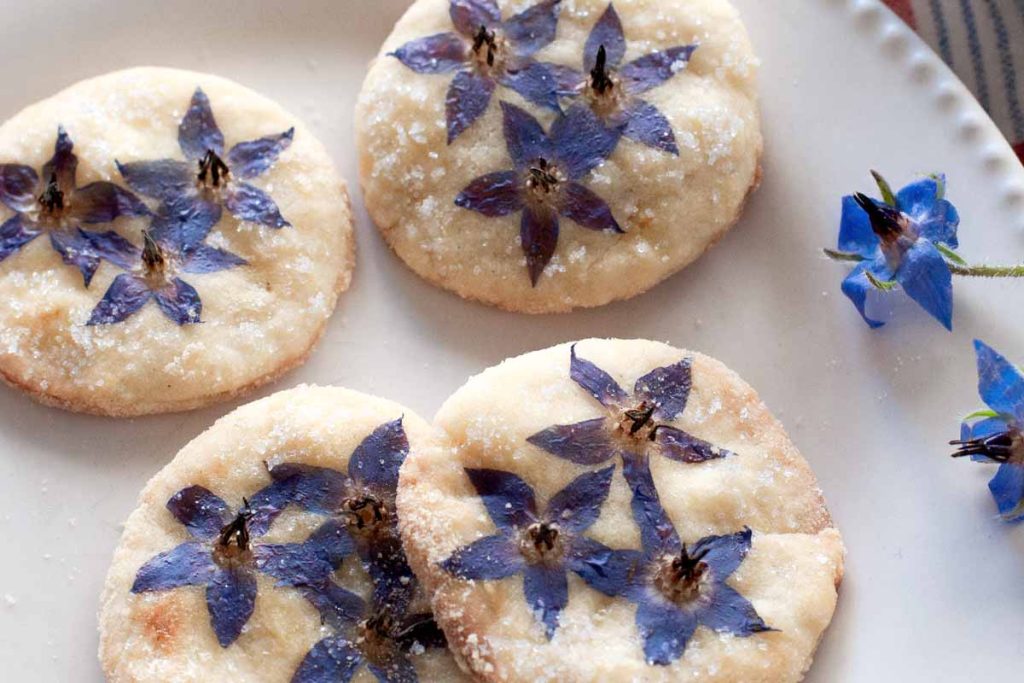
Fresh edible flower with a clean, cucumber-like flavor, used primarily raw for its cooling freshness and bright blue color in salads, drinks, and light dishes.
Flavor Profile
Fresh, green, and unexpectedly crisp, with a flavor often compared to cucumber skin and cool water.
The taste is lightly sweet and clean rather than floral, offering freshness without sweetness or perfume.
Culinary Uses
Preparations:
Best used fresh. Whole flowers are scattered over salads, chilled soups, soft cheeses, buttered vegetables, and cold desserts. They also hold their shape surprisingly well in baking — pressed gently into breads, biscuits, and savory pastries, where they retain color and add a graphic, almost botanical presence. Borage flowers are also frozen into ice cubes for drinks, where their blue remains striking and clear.
Pairings:
Pairs naturally with dairy, citrus, fruits, cucumber, peas, young greens, yogurt, fresh herbs, and light syrups. Its neutrality allows it to refresh richer elements without competing.
Kitchen Note:
Borage flowers are fragile. Add them at the last moment and avoid heat, which quickly dulls both their color and texture.
Historical & Cultural Notes
Borage has been cultivated since antiquity across the Mediterranean and Europe, valued as much for its leaves as for its flowers. In medieval kitchens, they were traditionally added to wine and cordial blends for their fresh, cooling note, long before they appeared as edible garnishes.
Its name comes from medieval Latin borrago, possibly from borra, meaning “rough hair,” describing the plant’s softly bristled leaves, or from the Arabic abū l-ʕaraq, “father of sweat,” reflecting its traditional cooling reputation.
Sensory Profile
Sight: Vivid blue stars held above rough, pale-green leaves; unmistakable even at a distance.
Touch: Delicate petals contrasted by a slightly fuzzy stem and foliage.
Smell: Clean and green, faintly grassy.
Taste: Cool, mild, and refreshing, with no lingering sweetness.
Botanical Note
While both the flowers and young leaves of this plant are edible, the blossoms are preferred in culinary use for their clarity of color and mild flavor.
Fun Fact
In medieval Europe, borage was associated with courage and good spirits, and its flowers were believed to lift the mood when added to food and drink.