
Common Name: Anise-Scented Sage
Scientific Name: Salvia guaranitica
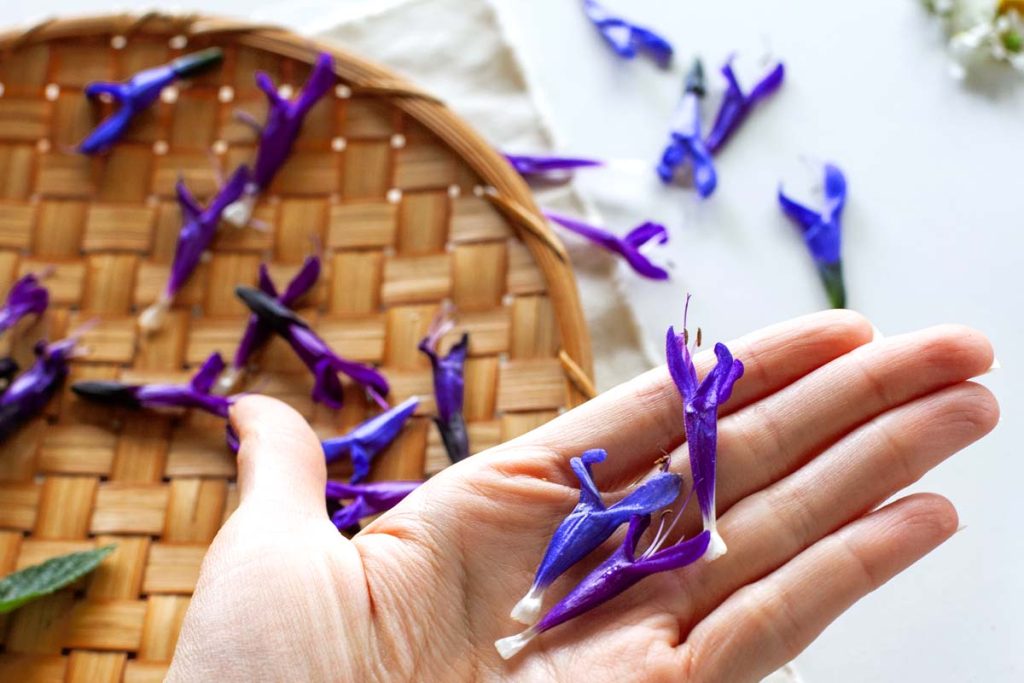
Aromatic flowering herb whose blossoms carry a soft anise note, used fresh to gently perfume salads, fruit, and light desserts.
Flavor Profile
Softly aromatic, with a clear anise and licorice note, tempered by fresh green and lightly herbal undertones.
The flavor is gentle rather than sweet, releasing its aroma more readily than its taste.
Culinary Uses
Preparations:
Used fresh as a finishing element rather than cooked. The flowers are added at the last moment to fruit salads, chilled desserts, syrups, or cold infusions, where their color and aroma remain intact. They may also be floated briefly in teas or used to scent sugars and syrups. When gently pressed onto cookies or light pastries before baking, the blossoms retain much of their shape and visual presence, adding color more than flavor.
Pairings:
Pairs naturally with citrus, berries, stone fruits, pear, figs, honey, and light creams. Its anise note also complements mint, lemon verbena, and other soft, aromatic herbs.
Kitchen Note:
Heat dulls both color and aroma. Add the blossoms only at the end, or use them in cold or barely warm preparations to preserve their clarity.
Historical & Cultural Notes
Native to South America, Salvia guaranitica has long been valued more for its aromatic qualities than for direct culinary use. Like many sages, it belongs to a genus historically associated with preservation, clarity, and fragrance rather than sweetness or nourishment.
While not as deeply embedded in European kitchen traditions as common sage, its flowers have been used locally in infusions and aromatic preparations, particularly where herbal teas form part of everyday life.
Sensory Profile
Sight: Tall, sculptural blooms in deep blue tones, striking against green foliage.
Touch: Smooth petals with a soft, resilient structure.
Smell: Fresh, anise-forward, lightly green and cooling.
Taste: Mild and aromatic, with licorice notes that fade cleanly.
Botanical Note
Unlike common sage, anise-scented sage is primarily appreciated for its flowers rather than its leaves in culinary contexts. The blossoms are preferred for their gentler flavor and vivid color.
Fun Fact
Unlike many blue flowers, anise-scented sage holds its color and structure well once cut. When kept cool and dry, the blossoms remain visually intact for several days, making them one of the more reliable blue flowers for decorative culinary use.