Common Name: Snapdragon
Scientific Name: Antirrhinum majus
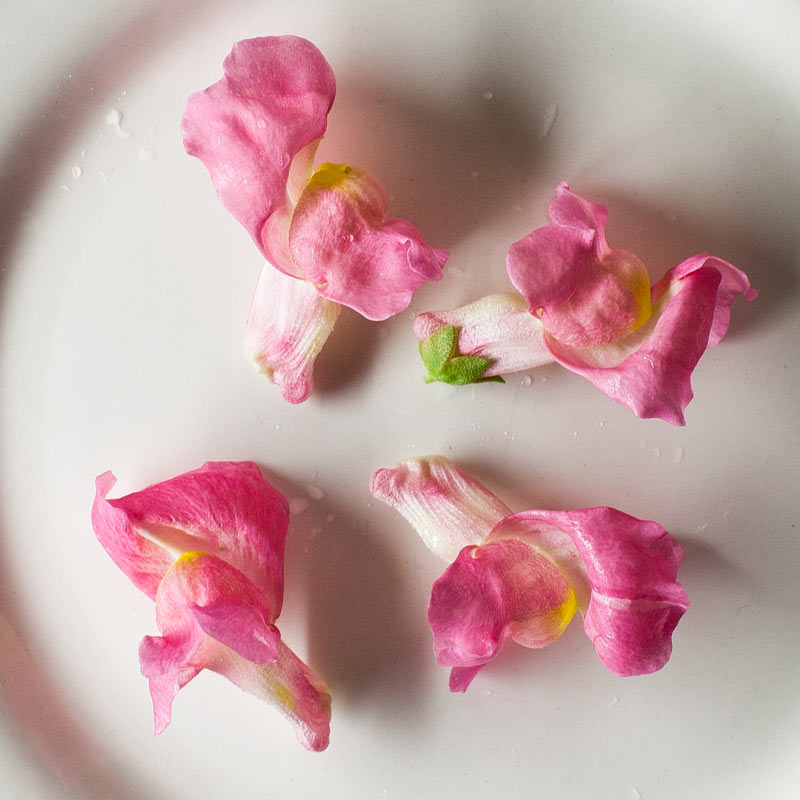
Mild, lightly bitter edible flower used fresh for color and form, appreciated more for visual impact and texture than for pronounced flavor.
Flavor Profile
Mild and vegetal, with a faint bitterness reminiscent of chicory or endive. The flavor is subtle and secondary to texture, offering a clean, green note.
Culinary Uses
Preparations:
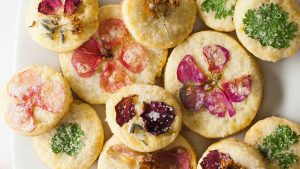
Used primarily fresh as an edible garnish, whole blooms can be scattered over salads, tarts, chilled soups, buttered vegetables, or composed plates—where their color and form matter more than their aroma—and can also be gently stuffed with savory fillings. They may also be gently pressed into doughs or baked into cookies and biscuits, where they retain structure and visual contrast.
Pairings:
Pairs well with savory and neutral elements: soft cheeses, eggs, cucumber, citrus vinaigrettes, fresh herbs, cream-based preparations, and mild grains.
Kitchen Note:
Snapdragon is best used fresh and in small quantities. Use shortly after harvest to preserve texture and color; heat diminishes both flavor and structure.
Historical & Cultural Notes
Native to the Mediterranean region, snapdragons have been cultivated for centuries for both their ornamental and practical qualities. Beyond their expressive, face-like blossoms, historical sources from Eastern Europe and Russia record the use of Antirrhinum majus seed oil as a household fat, particularly in regions where olive oil and butter were scarce. In the kitchen, the flower is valued primarily for its structure and color, contributing visual interest to any plate.
Sensory Profile
Sight: Upright flower spikes with softly folded velvety and slightly translucent petals resembling small open mouths, often with contrasting throats.
Touch: Tender, velvety petals with a delicate but resilient structure.
Smell: Very faint; fresh and green, without pronounced floral notes.
Taste: Neutral to mildly bitter, clean and vegetal.
Botanical Note
Only Antirrhinum majus is used as an edible flower. Other species within the genus are primarily ornamental and less commonly referenced in culinary contexts.
Fun Fact
When gently pressed at the sides, snapdragon flowers “open” and “close” like tiny mouths—an interaction that has fascinated gardeners and children for centuries.