
Common Name: Dahlia
Scientific Name: Dahlia spp. (Dahlia pinnata, Dahlia coccinea and related Dahlia species)
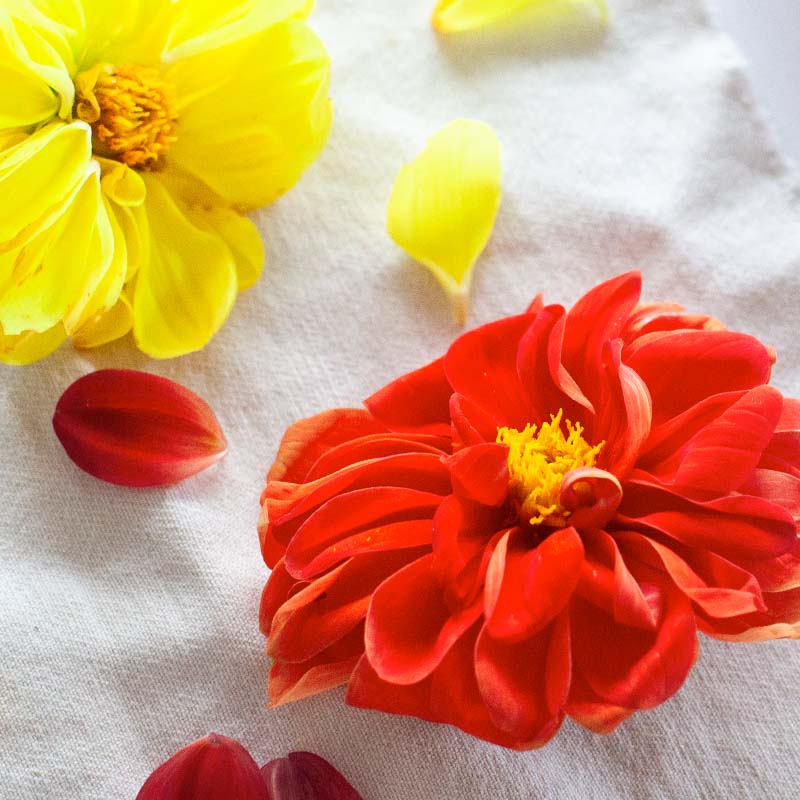
Mild, lightly sweet or bitter edible flower used fresh, appreciated primarily for its visual impact and crisp petal texture.
Flavor profile
Overall, fresh and mild, with a clean grassy sweetness, the petals are lightly crisp and watery, close to cucumber skin or lettuce hearts. In heirloom varieties, the flavor is more pronounced; in hybrid varieties, it tends to be subtler, cooler, and more unobtrusive.
Culinary Uses
Preparations:
Best used fresh. Individual petals or whole small blooms are used as edible garnishes, in salads, on cold soups, open sandwiches, fruit desserts, or pressed gently into soft cheeses and butter.
Pairings:
Pairs well with ingredients that allow its delicacy to remain intact: citrus, melon, cucumber, soft herbs, fresh cheeses, yogurt, honey, berries, and light vinaigrettes.
Kitchen Note:
Dahlia petals do not benefit from heat. Use raw and add at the last moment; cooking dulls both texture and color.
Historical & Cultural Notes
Indigenous to Mexico and Central America, dahlias are part of a living culinary tradition in which both flowers and tubers are used. In Mexican cooking, the petals are valued for their freshness and visual presence in salads and light dishes, while the tubers have long served as a more substantial food source.
In western flower symbolism, dahlias are often associated with elegance, inner strength, and dignified change—beauty that feels deliberate.
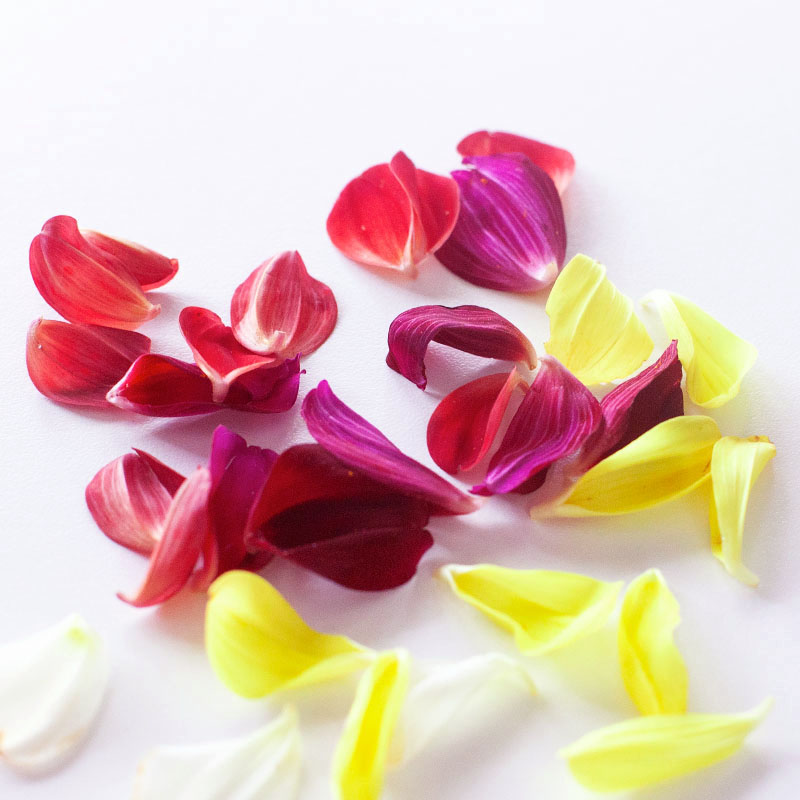
Sensory Profile
Sight: Architectural blooms with rhythmic, repeating petals; bold, sculptural, and unmistakably ornamental.
Touch: Fresh petals are cool and lightly crisp, with a smooth surface and gentle snap.
Smell: Very light, green, almost neutral.
Taste: Clean, grassy, faintly sweet, refreshing not quite floral.
Botanical Note
There are dozens of wild Dahlia species and thousands of cultivated varieties. Modern hybrid dahlias have been selectively bred for exaggerated petal count, symmetry, and color, not flavor. As a result, many show blooms with dense, layered petals that are visually dramatic but largely neutral on the palate. Simpler, single-flower forms—such as the red dahlia (Dahlia coccinea)—tend to be more tender and pleasant to eat, closer in texture and freshness to leafy greens than to aromatic flowers.
Fun Fact
Dahlias were once classified by early European botanists as a vegetable rather than an ornamental flower. Attempts to use the tubers as a substitute for potatoes proved disappointing, and the plant gradually shifted from botanical gardens and conservatories into the ornamental realm—where its flowers, not its roots, became its lasting legacy.